Key facts: Off-Track Door Repair
- Sectional garage doors roll on wheels in vertical and horizontal tracks on each side of the opening [1].
- Lift cables on each side raise the door evenly; if one slackens or breaks, the door can tilt and leave the track [2].
- Automatic openers must reverse on contact and when the safety beam is broken, which matters when a door is binding [3].
- Many technicians follow industry guidance from groups such as DASMA when servicing doors and hardware [4].
In this page
- 1How garage door tracks and rollers work
- 2Signs your garage door is off track or about to be
- 3Track figure
- 4Why garage doors come off their tracks
- 5How a technician puts a garage door back on track
- 6Common track and roller problems
- 7Safe steps when a door is off track
- 8Why off-track doors need a technician
- 9Off-track doors in Winston-Salem garages
- 10Rehanging versus replacing the door
- 11Problems that come with an off-track door
- 12How to keep a garage door on track
- 13When the bottom panel is damaged
- 14Older doors with unusual tracks
- 15Low-headroom tracks in older garages
- 16Checking a rehung door over the following weeks
- 17A typical off-track repair visit
- 18Why track brackets matter
- 19The horizontal tracks under the ceiling
- 20Reinforcing struts on double doors
- 21Keeping children away from a derailed door
- 22When a vehicle hits the door
- 23How the opener can make a derailment worse
- 24Off-track problems in older detached garages
- 25Uneven slabs and door alignment
- 26Perimeter seals and track rubbing
- 27When you can use the door again
- 28Derailed doors on newer attached garages
- 29Wind and storm damage to garage doors
- 30Common mistakes with off-track doors
- 31Keeping a record of the repair
- 32Inspecting panels and hinges after a derailment
- 33Historic district garages and derailed doors
- 34Heavier tracks for heavier doors
- 35Why calling early on track problems helps
- 36Questions about off-track garage doors
How tracks work
How garage door tracks and rollers work
A sectional garage door is made of several horizontal panels joined by hinges. Each panel has rollers at its edges, and the rollers run in steel tracks on both sides of the opening. The tracks rise vertically beside the door, curve at the top and run horizontally toward the back of the garage. As the door opens, the rollers follow the curve and the door slides back under the ceiling.
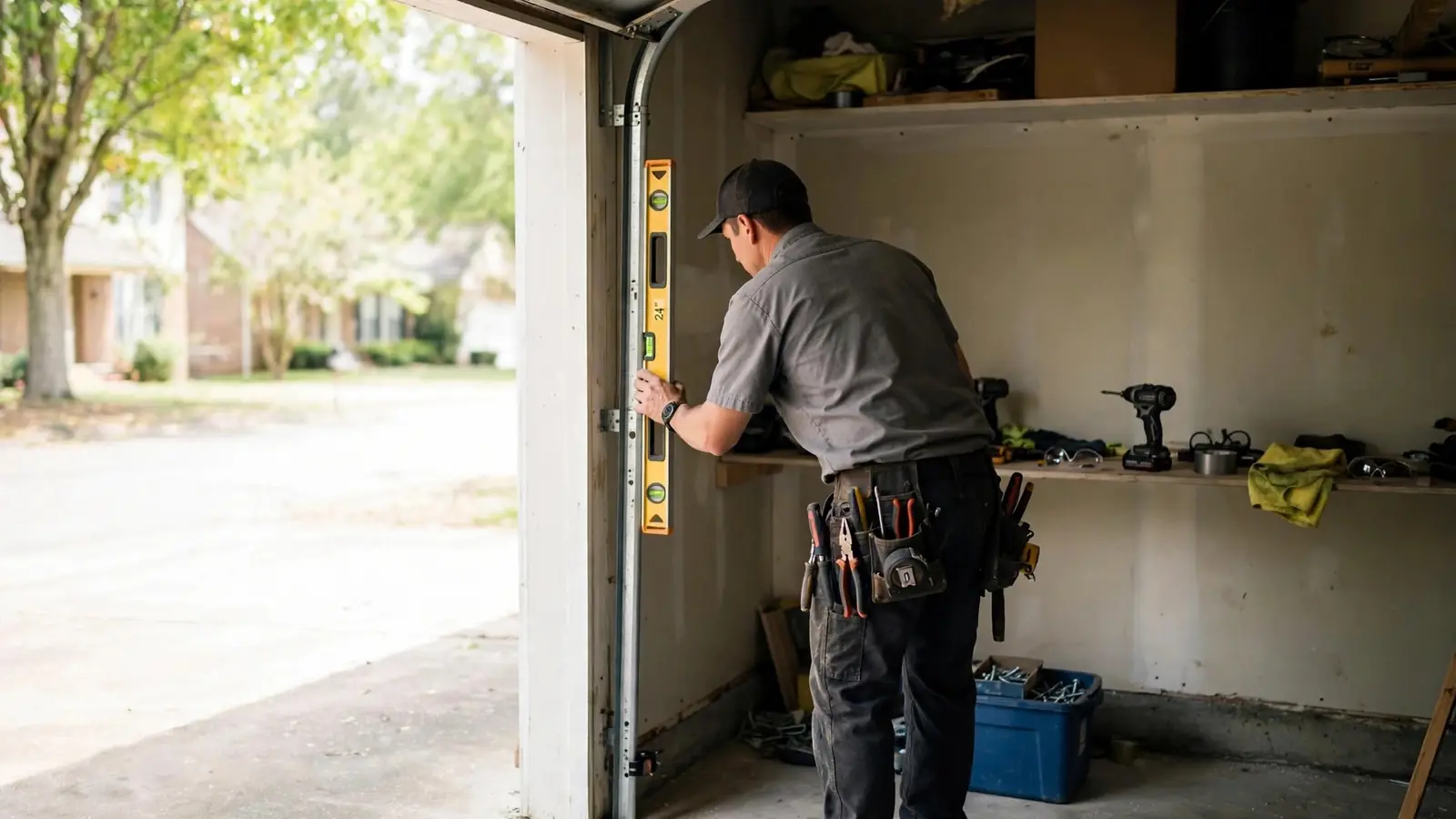
The tracks have to be parallel, plumb in the vertical section, level in the horizontal section and at the right distance from the door. Brackets fasten them to the wall and ceiling. Lift cables connected to the bottom of the door on each side, wound on drums or running over pulleys, pull the door up evenly. If everything is aligned and balanced, the rollers glide quietly.
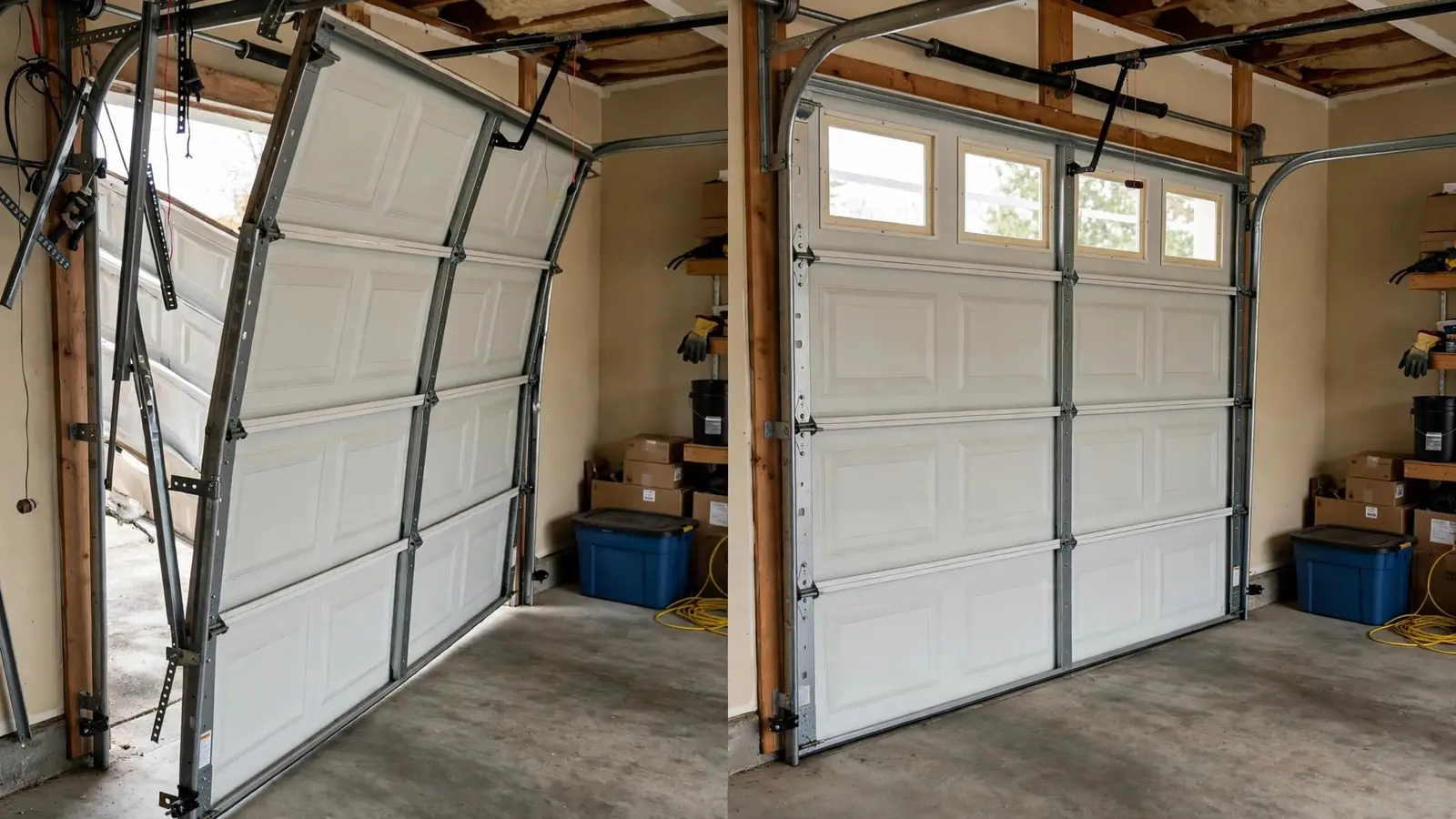
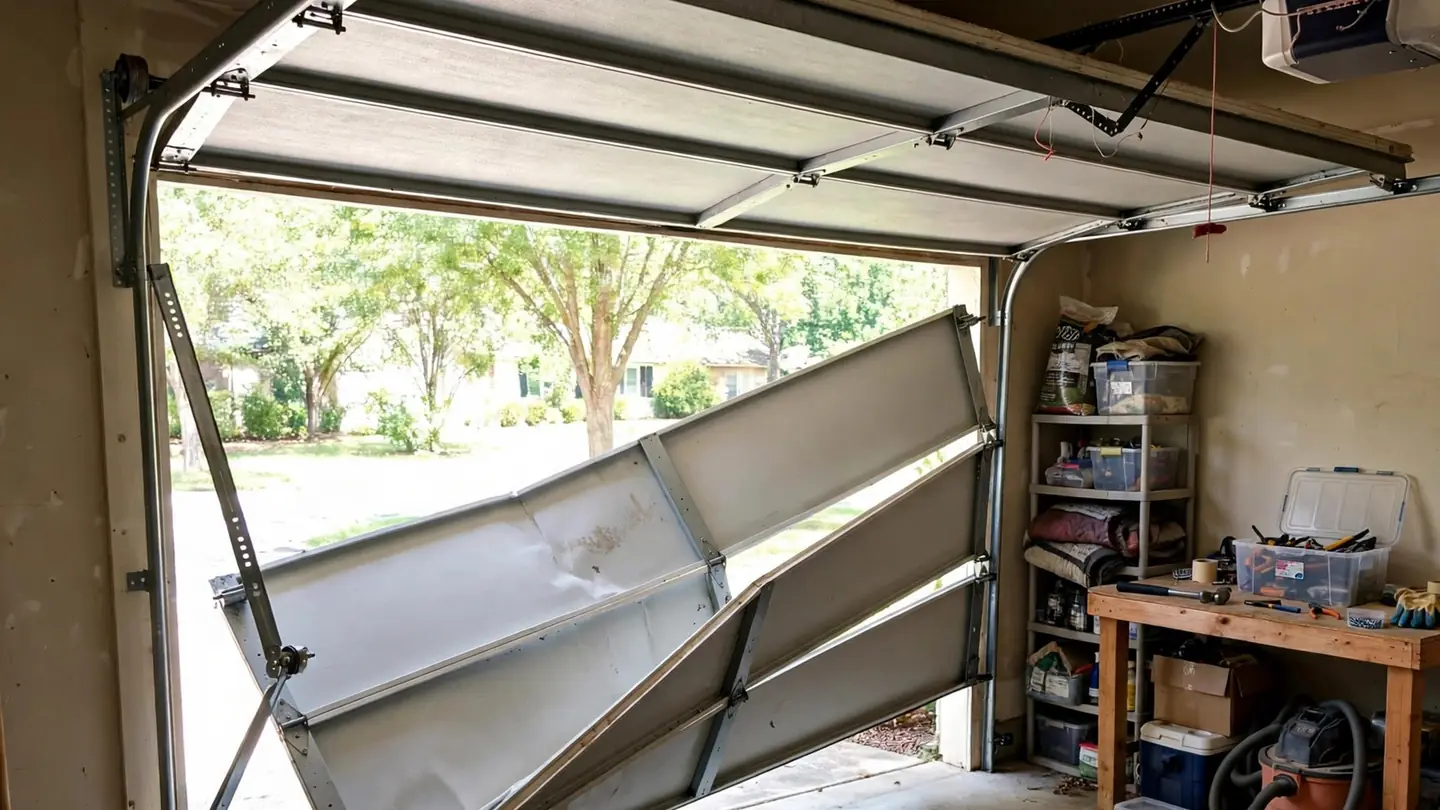
When a roller leaves the track, the door loses its guide on that side. It may hang at an angle, jam against the opening or twist. Panels can bend, hinges crack and cables tangle. The longer the door is operated in that state, the more damage occurs.
Off-track signs
Signs your garage door is off track or about to be
Some signs are obvious; others are early warnings.
Door hangs crooked
One side is higher than the other or the door tilts.
Read moreRoller visibly out of the track
A wheel sits outside the channel.
Gaps between rollers and track
The track has pulled away from the door.
Door jams halfway
Rollers bind in a bent or misaligned section.
Loud popping or scraping
Rollers jump or rub against the track.
Read moreSlack cable on one side
The door is lifting unevenly.
Read more
Track figure
Why doors leave the track
Why garage doors come off their tracks
The most common cause is impact. A car backing into a partly open door, a lawn mower or bike hitting the bottom panel, or a child swinging on the door can bend a track or push a roller out. Another common cause is a broken lift cable or spring on one side, which lets that side drop while the other stays up, twisting the door out of the tracks.
Wear contributes. Old rollers with worn bearings wobble and can jump the track, especially if the track has loosened. Loose track brackets let the track spread away from the door. Hinges that crack let panels sag.
Obstructions matter too. An object left in the track, ice on the floor that the door rides up on, or a bottom panel frozen to the slab can force the door crooked when the opener runs.
Finally, an opener with its force set too high will keep pushing a binding door instead of reversing, sometimes driving it off the track.
Off-track repair step by step
How a technician puts a garage door back on track
- 1
Secure the door
The door is clamped in place and the opener disconnected and unplugged.
- 2
Assess the cause
Cables, springs, rollers, hinges and tracks are inspected to find why it left the track.
- 3
Release tension if needed
Spring tension is safely released if cables are off their drums.
- 4
Straighten or replace track
Bent sections are straightened or replaced and brackets tightened.
- 5
Rehang the door
Rollers are guided back into the tracks section by section.
- 6
Replace damaged parts
Worn rollers, cracked hinges and frayed cables are replaced.
- 7
Rebalance and test
Springs are set, the door is tested by hand and the opener is readjusted and safety tested.
Track problems
Common track and roller problems
| Problem | Cause | Usual fix |
|---|---|---|
| Bent vertical track | Impact from car or equipment | Straighten or replace section |
| Track pulled away from door | Loose brackets | Realign and tighten brackets |
| Horizontal track sagging | Loose rear hangers | Re-hang and level |
| Roller out of track | Impact, worn roller, cable failure | Rehang door, replace roller |
| Cracked hinge | Wear or impact | Replace hinge |
| Door twisted | One cable or spring failed | Release, repair cable or spring, rehang |
What you can do yourself
Safe steps when a door is off track
Off-track doors are unpredictable. These steps keep you safe.
- Stop using the opener immediately and unplug it.
- Keep people, pets and vehicles away from the door.
- Do not pull the emergency release if the door is open and crooked.
- Do not try to force rollers back into the track.
- Photograph both sides of the door and the tracks from a safe distance.
- Note whether a cable is loose or a spring looks broken.
Off-track work limits
Why off-track doors need a technician
Rehanging a derailed door often involves releasing spring tension, working with cables under load and handling heavy panels that can fall. Without clamps and the right sequence, a door can drop or twist suddenly. This is a job for a trained technician.
Off-track repair in Winston-Salem: local specifics
Off-track doors in Winston-Salem garages
In Winston-Salem, off-track calls often come from tight garages. Detached garages behind older homes in Ardmore and the West End can be narrow, and backing out at an angle makes clipping the track easy. Some older garages have doors that were retrofitted with tracks in tight spaces, leaving little clearance.
Weather plays a role. Ice on garage floors and driveways in winter can let a bottom panel ride up as the door closes, pushing it crooked. Summer humidity swells wood doors so they bind in the track.
Sloped driveways in hilly areas such as Buena Vista mean the bottom of the door may meet the slab at a slight angle, which stresses one side. Regular adjustment helps.
Off-track repair or replacement
Rehanging versus replacing the door
| Damage | Rehang and repair | Consider replacing |
|---|---|---|
| Rollers out, no panel damage | Yes | No |
| Track bent, panels fine | Yes, with new track | No |
| One panel creased | Possible, replace panel if available | If panel unavailable |
| Several panels bent or cracked | Difficult | Often |
| Door old and heavily worn | Possible | Often sensible |
Related problems
Problems that come with an off-track door
Derailed doors often bring broken cables, damaged drums, cracked hinges, bent struts and opener damage. The opener may have strained against the door or had its rail bent. A technician checks all of these.
Preventing derailments
How to keep a garage door on track
Keep the tracks clear of objects. Back out straight and wait until the door is fully open. Replace worn rollers before they wobble. Check that track brackets are tight. Test the opener's reversal monthly so it stops rather than pushing against an obstruction. Clear ice from the door's path in winter.
Bent bottom panels
When the bottom panel is damaged
The bottom panel takes the most abuse. A bent bottom panel may still run if the rollers and hinges are intact, but it often leads to binding. Replacing a bottom panel is possible on many doors if the model and color are still available.
Older doors and track styles
Older doors with unusual tracks
Some older garages have doors with nonstandard tracks or converted swing-up doors. Parts may be hard to find. A technician can say whether repair is practical or whether a new door and track system would be more reliable.
Low-headroom tracks
Low-headroom tracks in older garages
Garages with limited space above the door often use low-headroom track kits with a different curve. These can be more sensitive to alignment. Technicians familiar with them check clearances carefully when rehanging.
After rehanging
Checking a rehung door over the following weeks
After repair, watch the door for a few weeks. It should run smoothly and quietly, stay balanced when stopped halfway and close evenly. Any return of tilting, noise or binding means something needs adjusting.
What happens during the visit
A typical off-track repair visit
When a technician arrives, the first job is making the door safe. They look at how the door is hanging, which rollers are out, whether cables are on their drums and whether a spring is broken. They clamp the door so it cannot move and unplug the opener. Then they explain what they see and what it will take: rehanging only, track repair, new rollers, new cables or a combination. Once you agree, they work section by section, often from one side to the other, guiding rollers back into straightened tracks. The door is balanced, tested by hand and then with the opener.
Track brackets and fasteners
Why track brackets matter
Each vertical track is held to the wall with brackets screwed into the door jamb or framing. Over years of vibration, those screws loosen, especially in older garages where the jamb wood has dried or rotted. A loose track spreads away from the door, giving rollers room to slip out. Technicians check every bracket, tighten loose fasteners and replace stripped ones, sometimes adding new blocking if the jamb is damaged.
Horizontal tracks and rear hangers
The horizontal tracks under the ceiling
The horizontal tracks run from the curve above the door toward the back of the garage, supported by rear hangers fixed to ceiling joists. If a hanger loosens or bends, the track sags, and the door can bind or derail at the top. Garages where items are stored on top of the tracks, or where the hangers were attached only to drywall, often have sagging tracks. Proper hangers fastened to framing keep the tracks level.
Talk to a local contractor
Questions about off-track door repair?
One call connects you with an independent garage door repair contractor who serves Winston-Salem.
Struts and wide doors
Reinforcing struts on double doors
Wide double doors often have horizontal steel struts on the inside of the top panel, especially where an opener arm attaches. Without struts, the top panel can bow under the opener's push and the door may bind. When a double door has come off track, the technician checks whether the top panel is bent and whether a strut would help prevent a repeat.
Children and off-track doors
Keeping children away from a derailed door
A door hanging off its track is unpredictable. Keep children and pets out of the garage until it is repaired. Make sure no one tries to climb on or push the door, and keep the opener unplugged so no one runs it from a remote or keypad.
Insurance and impact damage
When a vehicle hits the door
If a car or truck hit the door, document the damage with photos before repair. Some homeowners' or auto policies may cover impact damage. A technician can describe what was damaged, which helps when talking to an insurer.
Off-track doors and openers
How the opener can make a derailment worse
When a roller leaves the track, the opener does not know. If someone presses the button again, the opener keeps pulling or pushing until its force limit stops it. On older openers or ones with force set too high, that can bend the top panel, crack the door arm bracket or drive the door further out of line. That is why the first rule with an off-track door is to stop using the opener and unplug it.
Detached garages and older doors
Off-track problems in older detached garages
Older detached garages often have doors that were added or replaced long after the garage was built. Tracks may be mounted to old jambs with limited backing, and headroom may be tight. When these doors derail, the repair can involve shimming or reinforcing the jamb, adding proper track brackets and sometimes switching to a low-headroom track kit. Technicians familiar with older garages plan for these extras.
Garage floors and door alignment
Uneven slabs and door alignment
Concrete garage floors settle and crack over time, and sloped driveways meet the slab at angles. If the floor is uneven, the door's bottom panel may touch down on one side first, twisting the door slightly every time it closes. Over many cycles, that can loosen tracks and pull rollers out. Adjusting the tracks and bottom seal, or addressing the slab, prevents recurring problems.
Weather seals and track rub
Perimeter seals and track rubbing
The weatherstrip along the sides and top of the door opening seals against the door. If it is mounted too tight, it can press on the door and push it toward the track's edge, adding friction. If a door started binding after new weatherstrip was installed, the seal position may be the cause.
Getting the door back in service
When you can use the door again
After a derailed door is rehung, balanced and tested, it can usually be used right away. The technician should show you the door running smoothly, demonstrate the reversal test and explain what to watch for. If parts needed ordering, the technician may secure the door closed until they return.
Off-track in newer subdivisions
Derailed doors on newer attached garages
In newer homes around Clemmons, Lewisville and Kernersville, double doors on attached garages see heavy daily use. Common derailment causes there are bumped tracks from cars and bikes, worn builder-grade rollers and cables that fray from constant cycling. These doors are usually easy to rehang if panels are undamaged, and upgrading to sealed-bearing rollers reduces repeat problems.
Off-track after storms
Wind and storm damage to garage doors
Strong thunderstorm winds can push on a closed garage door, especially wide double doors without wind bracing, bowing the panels and stressing the tracks. If a door starts binding or slipping out of the track after a storm, have it checked. Doors in exposed hilltop locations see the most wind load.
What not to do
Common mistakes with off-track doors
Do not hammer a roller back into the track with a mallet, pry the track open with a screwdriver, or run the opener to see if the door will right itself. Each can make the door fall or twist further, and can turn a simple rehang into panel replacement and a much longer visit.
Documentation after repair
Keeping a record of the repair
Keep a written note of exactly what was replaced, the date of the visit and any follow-up recommendations from the technician, such as replacing rollers on the other side later. If the door derails again, that history helps the next technician find the root cause.
Panels and hinges after derailment
Inspecting panels and hinges after a derailment
When a door twists out of its tracks, the stress travels through the panels and hinges. Hinges can crack at their knuckles, panel edges can bend where rollers sit, and the top panel can crease where the opener arm attaches. After rehanging, the technician runs a hand along each section, checks every hinge and replaces anything cracked. A rehung door with a hidden cracked hinge may derail again.
Off-track doors in historic garages
Historic district garages and derailed doors
In the West End and other historic areas, some garages have custom wood or carriage-style doors. Rehanging them requires care because replacement panels may not exist and design review can apply to visible changes. Repairs that keep the existing door are often preferred.
Track gauge and thickness
Heavier tracks for heavier doors
Tracks come in different steel thicknesses. Heavy insulated or wood doors benefit from heavier-gauge tracks that resist bending. If a door has derailed more than once, the track may be too light for the door. Upgrading the track during repair can prevent repeats on heavy insulated or wood doors.
Calling early
Why calling early on track problems helps
A roller that rubs or pops occasionally is an early warning. Calling then usually means a quick adjustment, a tightened bracket or a single new roller. Waiting until the door hangs crooked often adds bent track, cracked hinges and opener damage to the repair.
Off-track questions
Questions about off-track garage doors
Can I put my garage door back on track myself?
It is risky. Doors off track can fall or twist, and repairs often involve spring tension. Call a technician.
Is it safe to use the opener if the door is off track?
No. Unplug it. Running the opener can cause more damage or make the door fall.
What causes a garage door to come off its track?
Impacts, broken cables or springs, worn rollers, loose tracks and obstructions are the common causes.
Will my door need to be replaced?
Often not. Many derailed doors can be rehung with new rollers, cables or track sections.
Why does my door tilt when it opens?
One cable or spring may have slackened or broken. Stop using the door and call.
Can ice cause a door to come off track?
Yes, ice can make the bottom ride up or freeze the door, forcing it crooked when the opener runs.
How can I prevent this from happening again?
Back out carefully, keep tracks clear, replace worn rollers and keep the opener's reversal working.
What should I tell the technician about an off-track door?
How the door is hanging, which side is out, whether a cable is loose or a spring broke, and whether anything hit the door.
Can wind push a door off its track?
Strong winds can bow wide doors and stress tracks. If the door binds after a storm, have it checked.
Can a sagging horizontal track cause problems?
Yes. A sagging track can make the door bind or derail near the top. Hangers should be fastened to ceiling framing.
My car hit the door. Can it still be repaired?
Often, if the panels are not badly creased. Tracks and rollers can be replaced and the door rehung.
Will a technician check the opener after rehanging the door?
They should. Limits, force and safety reversal need retesting after a door repair.