
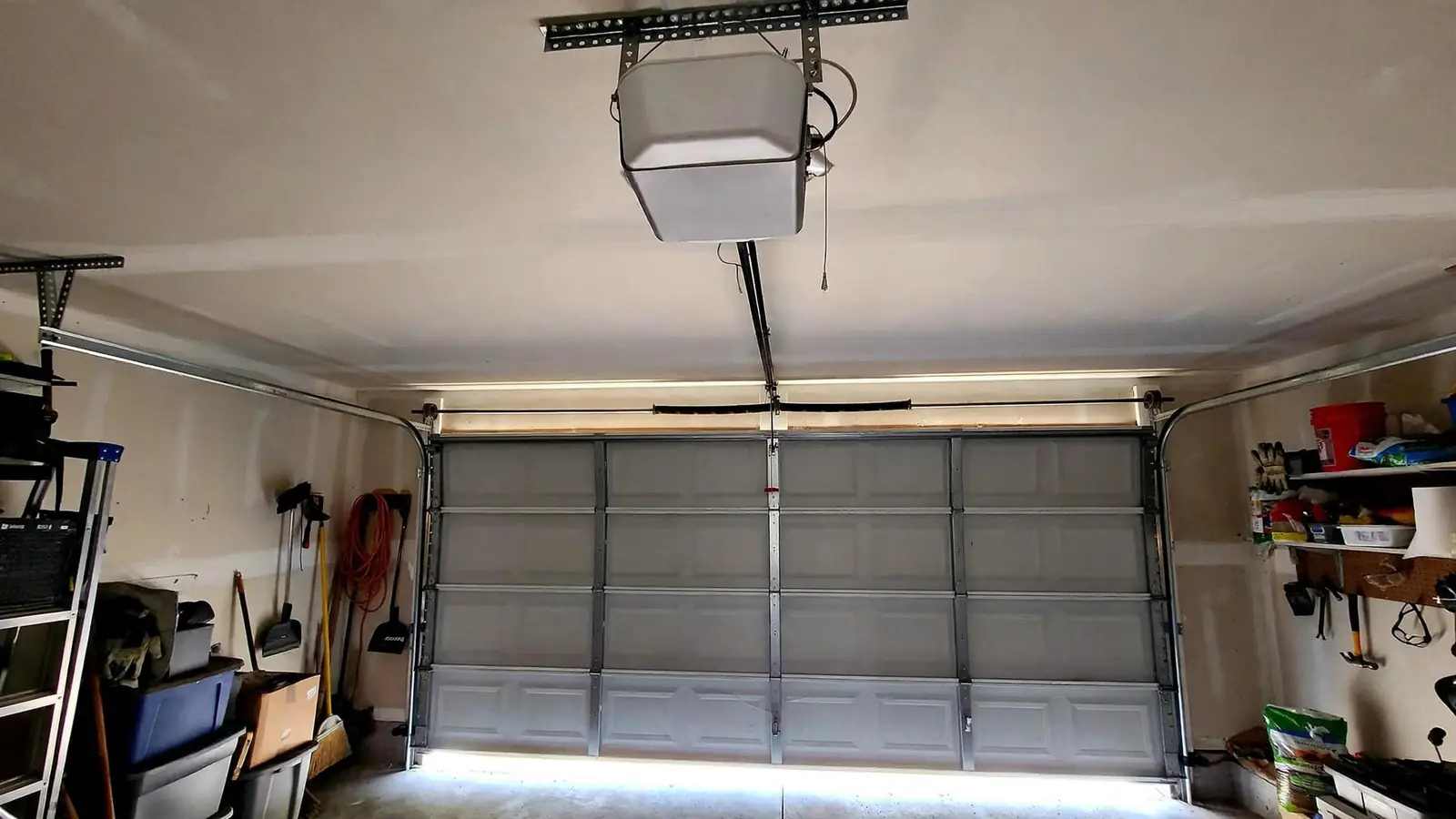
Key facts: Opener runs but door won't move
In this guide
- 1Opener runs but the door won't move: the short answer
- 2Opener runs, door stays: causes
- 3Gear figure
- 4Safe checks when the opener runs
- 5When the trolley is disengaged
- 6When the gear is stripped
- 7When a spring is the real cause
- 8How a technician fixes it
- 9Repair or replace the opener
- 10Local factors
- 11When the chain or belt is the cause
- 12Screw-drive openers and temperature
- 13When a wall-mount opener runs without lifting
- 14Why turning up the force is a mistake
- 15Worn trolley carriages
- 16Older openers and parts availability
- 17Testing after the opener is repaired
- 18When someone pulled the release by accident
- 19Opener size and door weight
- 20Openers that lose settings after outages
- 21When to call instead of experimenting
- 22Ruling out the remote
- 23Preventing this problem
- 24What to tell the technician
- 25Questions about an opener that runs without moving the door
Opener runs: the short answer
Opener runs but the door won't move: the short answer
Check whether the trolley is disengaged from the emergency release. If it is engaged, try the door by hand with the release pulled and the door closed. A heavy door means a broken spring; a light door with a running opener points to a stripped gear or broken chain or belt.
Opener symptom table
Opener runs, door stays: causes
| What you see | Likely cause | What to do |
|---|---|---|
| Trolley moves, door does not | Release disengaged | Re-engage per manual |
| Motor hums, trolley still | Stripped gear | Call |
| Chain or belt slack | Broken or slipped drive | Call |
| Door heavy by hand | Broken spring | Call |
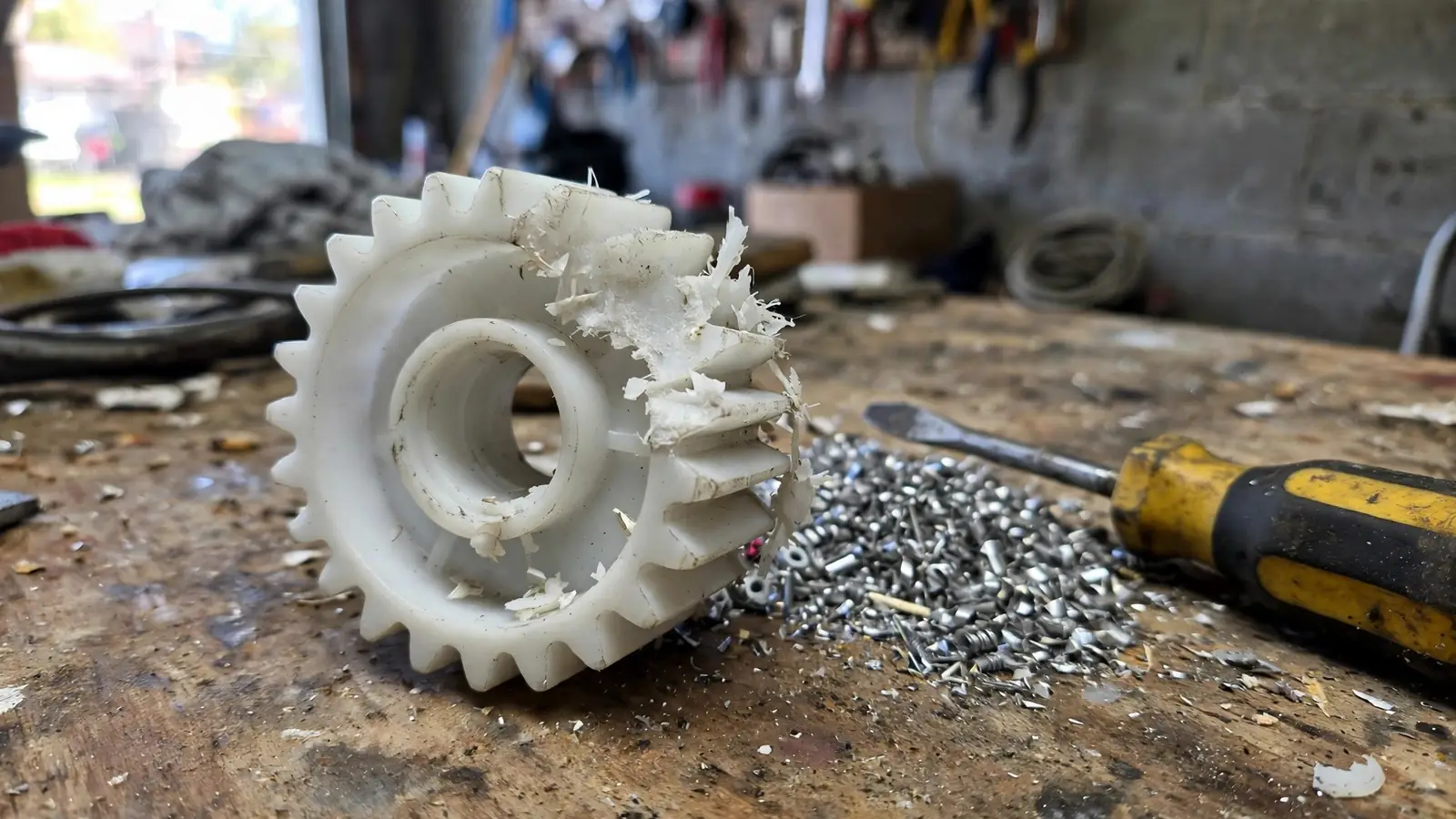
Gear figure
Safe checks
Safe checks when the opener runs
- Look at the trolley and release.
- With the door closed, pull the release and lift by hand.
- Look for a spring gap.
- Unplug the opener if it keeps humming.
Disengaged trolley
When the trolley is disengaged
After someone pulls the release, the trolley rides along the rail without the door. Re-engaging it per the manual fixes it.
Stripped gear
When the gear is stripped
The motor turns but the gear teeth slip. A technician replaces the gear after checking the door's balance.
Broken spring
When a spring is the real cause
The opener cannot lift a door without spring help. It may hum, strain or lift a few inches. Fix the spring first.
Technician steps
How a technician fixes it
- 1
Test door by hand
Check balance.
- 2
Inspect opener
Gear, drive, trolley.
- 3
Repair
Replace parts or fix springs.
- 4
Retest
Force, limits and reversal.
Repair or replace
Repair or replace the opener
Repair if the opener is otherwise sound; replace if it is old or lacks safety sensors.
Winston-Salem notes
Local factors
Storm surges damage boards; ice-frozen doors strip gears.
Chain and belt problems
When the chain or belt is the cause
On chain-drive openers, a loose chain can slip off its sprocket, letting the motor run without moving the trolley. A broken belt on a belt-drive opener does the same. Chains can be retensioned according to the manual; broken belts and damaged sprockets need replacement parts. If the chain hangs well below the rail or the belt is visibly torn, call a technician.
Screw-drive openers
Screw-drive openers and temperature
Screw-drive openers use a threaded rod. In very cold or very humid conditions, the grease on the rod can stiffen or wash off, and the trolley may bind. Cleaning and re-greasing with the specified lubricant often restores operation. If the trolley threads are stripped, the trolley needs replacing.
Jackshaft openers
When a wall-mount opener runs without lifting
Wall-mount or jackshaft openers turn the torsion shaft directly. If the motor runs but the shaft does not turn, a set screw or coupling may have slipped. If the shaft turns but the door does not lift, a spring or cable has likely failed. These units should be serviced by a technician familiar with them.
Call about this problem
Questions about opener runs but door won't move?
One call connects you with an independent garage door repair contractor who serves Winston-Salem.
Don't overcorrect with force settings
Why turning up the force is a mistake
When a door will not move, it is tempting to increase the opener's force setting. That may make the opener lift a door with a broken or weak spring for a while, but it strains the motor and gear and can defeat the safety reversal. Fix the door problem and leave the force at the proper setting.
Trolley carriage wear
Worn trolley carriages
The trolley that rides the rail has its own wear parts. A cracked trolley or worn release mechanism may let the trolley disengage on its own, so the motor runs but the door stays. Replacing the trolley restores the connection.
Opener age and parts
Older openers and parts availability
Very old openers may have parts that are hard to find. If a gear or trolley fails on an opener that also lacks modern safety features, replacement is usually the better route.
After the fix
Testing after the opener is repaired
After repair, run the door through several cycles, confirm it stops at the right positions and test the safety reversal by contact and by breaking the beam. If anything seems off, stop using the opener and call back.
Emergency release mishaps
When someone pulled the release by accident
Kids and visitors sometimes pull the red release cord out of curiosity, leaving the trolley disengaged. The next time the button is pressed, the trolley moves without the door. Re-engaging it per the manual solves the problem. Some homeowners tie the cord up out of easy reach while keeping it accessible for adults.
Openers and heavy doors
Opener size and door weight
A heavy insulated or wood door can wear out a light-duty opener's gear quickly, especially if the springs are not perfectly balanced. If gears keep stripping, the springs may need adjusting or the opener may be undersized for the door. A technician can check both.
Power-loss resets
Openers that lose settings after outages
Some openers lose their limit settings or remote programming after a power outage or surge. If the door stops short or remotes stop working after a storm, the opener may need resetting according to the manual.
Calling for help
When to call instead of experimenting
If the trolley is engaged, the door moves freely by hand and the opener still will not move it, the problem is inside the opener. Rather than opening the motor unit, call a technician.
Remote versus motor
Ruling out the remote
If the motor runs, the remote and wall button are working. The problem is between the motor and the door, or the door itself.
Prevention
Preventing this problem
- Keep springs balanced.
- Never run the opener against a frozen door.
- Test reversal monthly.
Tell the technician
What to tell the technician
- Whether the trolley moves.
- Whether the door is heavy by hand.
- Any noises.
Opener guide questions
Questions about an opener that runs without moving the door
Why is my opener humming?
Stripped gear, disengaged trolley or broken spring.
Can I re-engage the trolley myself?
Yes, following the manual, with the door closed.
Is a stripped gear worth repairing?
Often, if the opener is otherwise sound.
Could a broken spring cause this?
Yes, the opener cannot lift an unbalanced door.
Why does my trolley move but not the door?
The trolley is disengaged from the door. Re-engage it following the manual with the door closed.
Can a power outage reset my opener?
Some openers lose settings after outages or surges. Check the manual for resetting limits and remotes.
Does a stripped gear mean I need a new opener?
Not necessarily. Gears can be replaced if the opener is otherwise sound.
How do I tell if the noise is the opener or the door?
Pull the release with the door closed and move the door by hand. If it is quiet, the opener is the source.
Should I keep pressing the button?
No. Unplug and check.