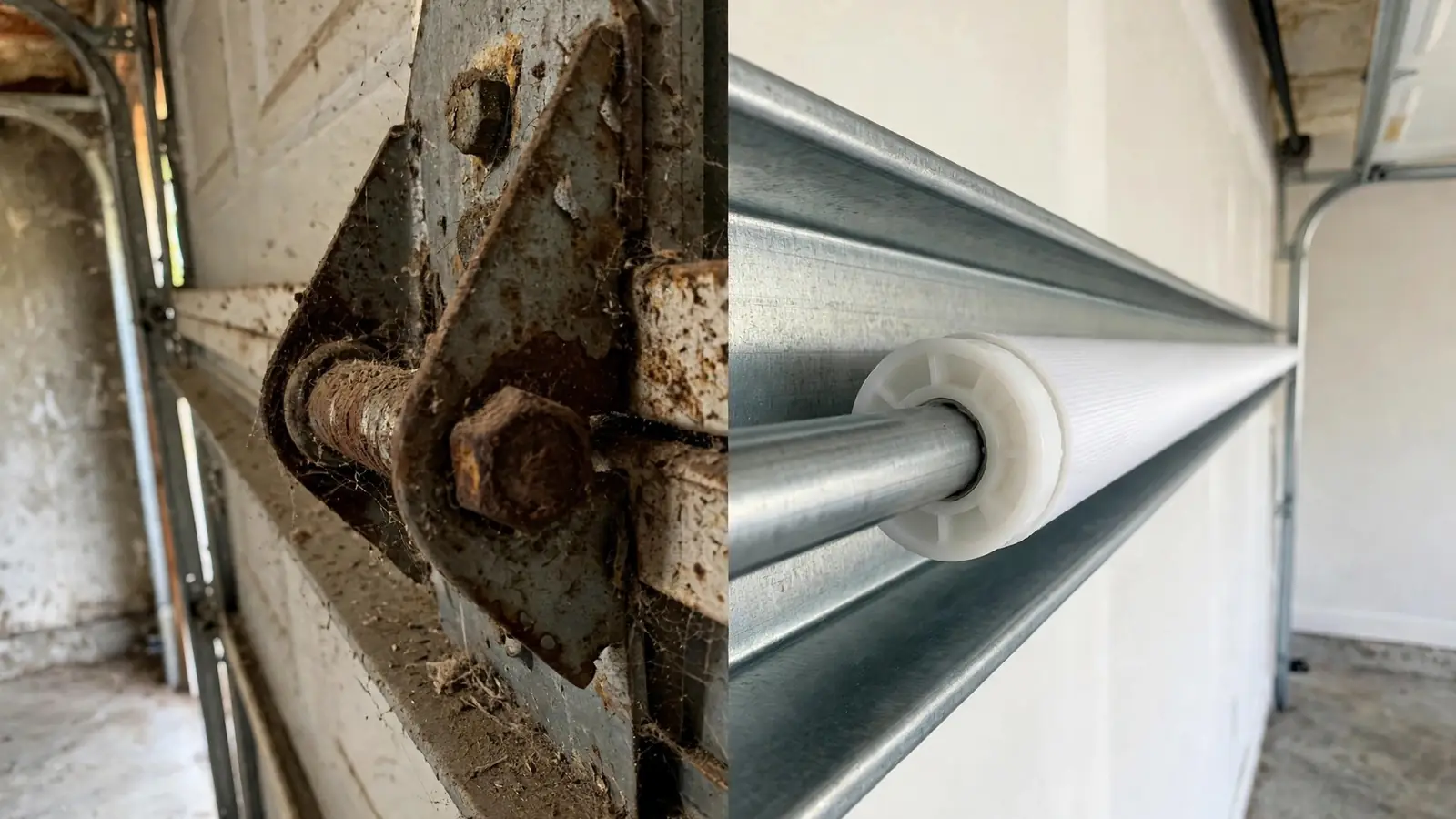
Key facts: Cable and Roller Replacement
- Garage door lift cables connect the bottom of the door to the spring system and lift both sides evenly [1].
- Rollers run in steel tracks on each side and guide the door as it moves [2].
- Opener safety reversal must still work after hardware changes, as required for automatic openers [3].
- Winston-Salem's humid climate encourages rust on steel cables and rollers in unconditioned garages [4].
In this page
- 1What lift cables and rollers do
- 2Signs your cables or rollers need attention
- 3Roller figure
- 4Why cables and rollers wear out
- 5How a technician replaces cables and rollers
- 6Garage door roller types compared
- 7Cable and roller checks homeowners can make
- 8Why cable work is dangerous for homeowners
- 9Cables and rollers in Winston-Salem garages
- 10When hardware repair is enough
- 11Problems connected to cables and rollers
- 12Making a garage door quieter
- 13Hinges that hold the rollers
- 14Cable drums and their role
- 15Bottom seals and rust at the floor
- 16A typical cable replacement visit
- 17Matching the right cable to the door
- 18How to tell a roller is worn
- 19Replacing hardware as a set
- 20How to lubricate rollers and hinges
- 21Hardware on decades-old doors
- 22What happens when a cable breaks
- 23Pulleys and cables on extension spring doors
- 24Roller noise in homes with rooms above the garage
- 25Cable drums that need replacing
- 26Rusted bottom brackets near the floor
- 27What to expect after new cables and rollers
- 28How garage use affects cables and rollers
- 29Finding parts for older doors
- 30Slowing rust on cables and brackets
- 31Track wear from bad rollers
- 32How cables and springs depend on each other
- 33Seasonal hardware care in Forsyth County
- 34When hardware has gone too far
- 35Rollers on wood and carriage-style doors
- 36What homeowners should never do with cables
- 37Cables on single-car doors
- 38How worn rollers strain the opener
- 39A two-minute monthly check
- 40Questions about garage door cables and rollers
How cables and rollers work
What lift cables and rollers do
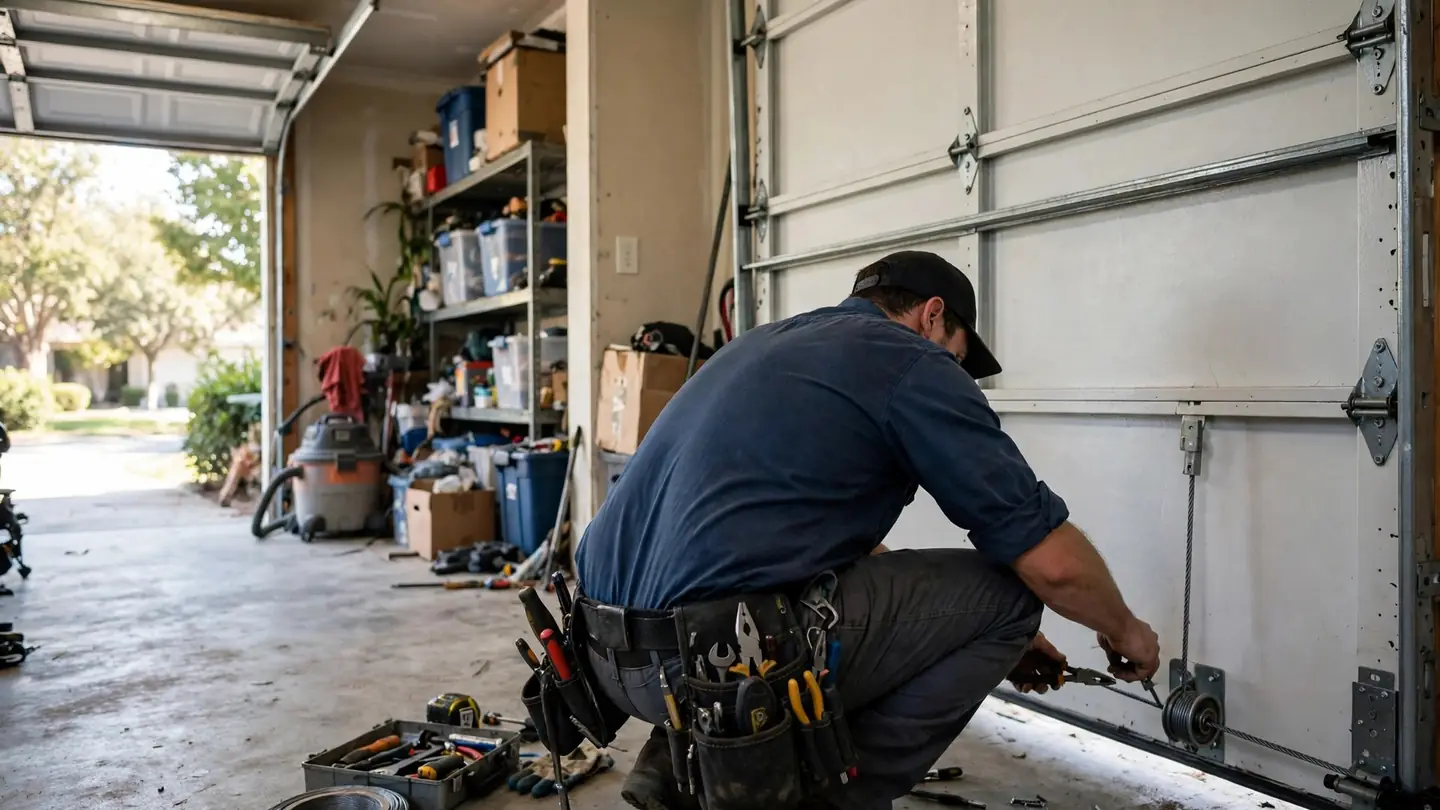
Lift cables are steel wire ropes attached to the bottom brackets at each lower corner of the door. On torsion systems, the cables run up to drums on the spring shaft; as the shaft turns, the drums wind the cables and lift the door. On extension systems, cables run over pulleys connected to the springs. Either way, the two cables must lift equally, or the door tilts.
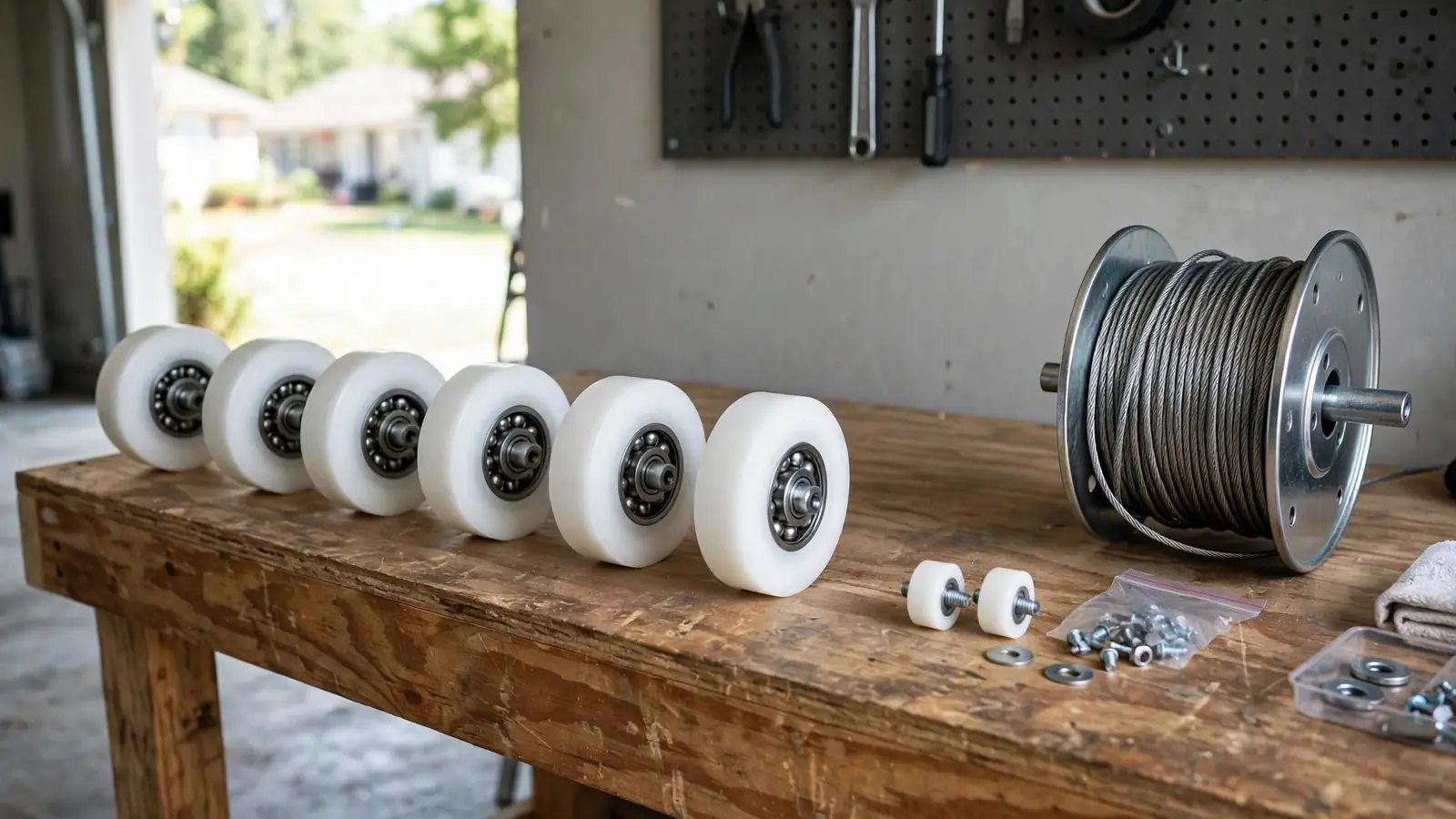
Rollers are wheels on short shafts that sit in hinges and brackets along the door's edges. They run in the tracks and carry the door's sideways guidance. Steel rollers are common on older and builder-grade doors; nylon rollers with sealed bearings are quieter and smoother. Rollers wear at their bearings and wheels, and as they wear they wobble, grind and eventually jump the track.
Drums, pulleys and bottom brackets work alongside these parts. Cracked drums, worn pulleys and rusted bottom brackets cause cable failures.
Cable and roller warning signs
Signs your cables or rollers need attention
Look for these signs during a quick monthly check.
Frayed strands on a cable
Broken wires near the bottom bracket or drum signal a cable about to fail.
Slack cable on one side
The door may be lifting unevenly or a spring is weak.
Read moreDoor tilts as it opens
One cable is not lifting as much as the other.
Grinding or squealing
Worn roller bearings or dry rollers.
Read moreWobbly or cracked rollers
Wheels rock in the track or show cracks.
Rust on cables or brackets
Corrosion weakens steel over time.
Roller figure
Why cables and rollers fail
Why cables and rollers wear out
Cables flex every time the door moves, especially where they wrap around drums or pulleys. Over thousands of cycles, individual wires fatigue and break. Rust accelerates this, and in Winston-Salem's humid summers, unconditioned garages encourage corrosion. Cables also fail when they rub against brackets or when a spring breaks and the sudden jolt kinks them.
Rollers wear at their bearings. Steel rollers without sealed bearings collect dust and pollen, lose lubrication and start to grind. Plastic wheels on low-grade rollers crack. Rollers in misaligned tracks wear unevenly. Once a roller wobbles, it can jump the track, which brings a bigger repair.
Bottom brackets rust because they sit near the floor where water, road salt from cars and debris collect. A rusted bracket can fail under cable tension.
Cable and roller replacement step by step
How a technician replaces cables and rollers
- 1
Secure the door
The door is closed or clamped, and the opener disconnected.
- 2
Release spring tension
For cable replacement, tension is safely released.
- 3
Replace cables
New cables are attached at the bottom brackets and wound on the drums evenly.
- 4
Inspect drums and brackets
Cracked drums and rusted brackets are replaced.
- 5
Replace rollers
Rollers are swapped one at a time, with care at the bottom brackets.
- 6
Rewind and balance
Springs are rewound and the door balanced.
- 7
Test
The door is run by hand and with the opener, and the safety reversal is checked.
Roller types
Garage door roller types compared
| Roller | Features | Notes |
|---|---|---|
| Steel, unsealed bearings | Durable but noisy | Needs regular lubrication |
| Steel, sealed bearings | Smoother, longer-lasting | Good for heavy doors |
| Nylon, sealed bearings | Quiet and smooth | Popular for attached garages under living space |
| Plastic wheel, no bearings | Basic, light-duty | Wears and cracks quickly |
| Long-stem rollers | Reach deeper into tracks | Used on some heavier doors |
What you can do yourself
Cable and roller checks homeowners can make
Look but do not touch the cables or bottom brackets.
- Look at both cables from the floor for frayed or broken strands.
- Watch the door open to see whether it rises evenly.
- Listen for grinding or squealing from rollers.
- Lubricate roller bearings and hinges with a garage door lubricant, not grease that attracts dust.
- Keep tracks clean but do not lubricate the track itself heavily.
- Never loosen bottom brackets; they are under spring tension.
Cable work limits
Why cable work is dangerous for homeowners
Lift cables and bottom brackets are under spring tension. Removing a bottom bracket screw with tension on it can release that force suddenly, causing serious injury. Replacing cables requires releasing spring tension properly. Roller replacement at the bottom brackets carries the same risk. Leave these to a technician.
Cable and roller replacement in Winston-Salem: local specifics
Cables and rollers in Winston-Salem garages
Humidity is a constant in Forsyth County. Unconditioned garages see condensation on cool mornings after humid nights, which rusts cables, brackets and steel rollers. Spring pollen collects in roller bearings and tracks. Winter brings road salt carried in on cars, which rusts bottom brackets near the floor.
Garages that double as entries, common in newer subdivisions in Clemmons and Kernersville, cycle the door many times a day, wearing rollers faster. Older detached garages in Ardmore may have original steel rollers that have never been replaced.
Repair or replace hardware
When hardware repair is enough
| Situation | Replace parts | Consider a new door |
|---|---|---|
| Frayed cable, door sound | Yes | No |
| Worn rollers, door sound | Yes | No |
| Rusted bottom brackets and bottom panel rotted | Parts and panel | If panels are failing |
| Hardware worn throughout an old door | Possible | Often sensible |
| Want a quieter door | Nylon rollers and lubrication | Not needed |
Related problems
Problems connected to cables and rollers
A broken cable often follows a broken spring, or causes the door to derail. Worn rollers lead to off-track doors and noisy operation. Rusted brackets and cracked drums cause cables to fail. The opener may strain against binding rollers. A technician checks the whole system.
Quieter doors
Making a garage door quieter
Swapping steel rollers for nylon rollers with sealed bearings, lubricating hinges and springs, tightening loose hardware and using a belt-drive opener can make a door much quieter, which matters in homes with bedrooms over the garage.
Hinges and rollers
Hinges that hold the rollers
Rollers sit in hinges between panels. Worn or cracked hinges let rollers sit at the wrong angle and wear faster. Replacing cracked hinges at the same time as rollers keeps the door aligned.
Cable drums
Cable drums and their role
Drums on the spring shaft have grooves that hold the cable as it winds. A cracked drum or cable that skips grooves leads to uneven lifting and early cable failure. Drums are checked whenever cables are replaced.
Bottom seals and brackets
Bottom seals and rust at the floor
The bottom seal keeps water, pests and drafts out. Where it fails, water reaches the bottom brackets and rusts them. Replacing a cracked seal protects the brackets and cables.
What happens during a cable repair visit
A typical cable replacement visit
The technician first looks at both cables, the drums and the bottom brackets, and checks whether a spring broke along with the cable. With the door secured, they release spring tension, remove the old cables, inspect and replace any damaged drums or brackets, then attach new cables, wind them evenly on both drums and rewind the springs. The door is balanced and tested by hand, then the opener is reconnected and its safety reversal confirmed. Replacing both cables together keeps the lift even.
Cable sizes and lengths
Matching the right cable to the door
Cables come in different diameters and lengths depending on door weight and height. A heavier door needs a stronger cable. The cable must be long enough to reach from the bottom bracket to the drum with the door closed, with a few wraps left on the drum. Using the wrong length leads to uneven lifting or cables jumping off the drums. Technicians measure the door height and check the drum type before choosing cables.
Signs a roller is failing
How to tell a roller is worn
Look at each roller as the door moves. Worn rollers wobble, tilt in the track or turn unevenly. Plastic wheels may show cracks or flat spots. Steel rollers grind or squeal when dry and may leave metal dust along the track. If a roller has stopped turning and is sliding instead, it will wear the track and strain the opener.
Hinges, brackets and rollers together
Replacing hardware as a set
Rollers, hinges and brackets work as a set. When rollers are worn, hinges are often loose or cracked too. Replacing worn hinges and tightening every hinge screw at the same time as the rollers gives the door a fresh, quiet run. Bottom roller brackets are under tension and are handled only by technicians.
Lubrication done right
How to lubricate rollers and hinges
Use a garage door lubricant or light silicone or lithium spray on roller bearings, hinges and springs. Avoid heavy grease on tracks, which collects dust and pollen. Wipe tracks clean with a cloth. A light treatment twice a year, before summer humidity and before winter, keeps parts moving freely.
Older doors with original hardware
Hardware on decades-old doors
Some older doors in Winston-Salem still run on original steel rollers and cables that have never been replaced. Even if they still work, they are likely worn and rusted. Replacing cables and rollers on an older but sound door can make it run like new and reduce the risk of sudden failure.
Talk to a local contractor
Questions about cable and roller replacement?
One call connects you with an independent garage door repair contractor who serves Winston-Salem.
When a cable snaps
What happens when a cable breaks
When a lift cable snaps, that side of the door loses its lift. The door may drop on that side, tilt and jam in the tracks, or come down hard if the other cable cannot hold it alone. The loose cable may whip and tangle around the drum or shaft. Stop using the door, keep clear and call. Do not try to rewind a loose cable onto the drum yourself.
Extension spring pulleys
Pulleys and cables on extension spring doors
On doors with extension springs, cables run over pulleys mounted near the springs and at the top of the track. Worn pulleys with cracked wheels or bad bearings shred cables quickly. When cables are replaced on these doors, the pulleys should be inspected and replaced if worn, and safety cables should run through the springs.
Roller noise and living space
Roller noise in homes with rooms above the garage
Steel rollers on a dry track can be loud enough to wake people in bedrooms above the garage. Upgrading to nylon rollers with sealed bearings and lubricating hinges usually makes a noticeable difference. Combined with a belt-drive opener, it can make the door far quieter.
Signs the drum is damaged
Cable drums that need replacing
A drum with a cracked flange or worn grooves lets the cable ride out of position, which leads to uneven lifting and frayed cables. Drums can also slip on the shaft if set screws loosen. When cables are replaced, the technician checks drums and replaces them if damaged.
Bottom bracket rust
Rusted bottom brackets near the floor
Bottom brackets sit where water, salt and debris collect. In Forsyth County, winter road treatment carried in on tires and summer humidity both rust them. A rusted bracket can tear under cable tension. Technicians replace brackets with fresh ones when replacing cables if rust is advanced.
After hardware replacement
What to expect after new cables and rollers
After replacement, the door should run evenly, quietly and smoothly, stay balanced halfway and close square to the floor. Keep up with light lubrication of bearings and hinges and look at the cables during monthly checks.
Garage use and wear
How garage use affects cables and rollers
A garage opened a couple of times a day wears its cables and rollers slowly. One used as the main entrance, a workshop with the door open for ventilation or a gym opened many times daily wears them much faster. If your door cycles often through the day, ask about higher-grade rollers and have cables checked more often.
Older garages and replacement parts
Finding parts for older doors
Most cables and rollers are standard sizes, but some older or unusual doors use special parts. A technician can match or adapt them. When parts are no longer available, hardware upgrades or a new door may be suggested.
Rust prevention
Slowing rust on cables and brackets
Keep the garage ventilated, fix gaps in the bottom seal that let water in, and rinse road salt off the floor near the door in winter. A light coat of lubricant on cables, where the manufacturer allows, and on brackets can slow corrosion.
Rollers and track wear
Track wear from bad rollers
Rollers that stop turning slide in the track instead of rolling. That grinds grooves into the steel, which later catches new rollers. Replacing seized rollers promptly protects the tracks.
Cables and spring balance
How cables and springs depend on each other
Cables carry the lift that springs provide. If a spring is weak, cables can go slack and slip off drums; if a cable breaks, the spring can unwind suddenly. Technicians check spring balance whenever cables are replaced, and replace both when both are worn.
Cables, rollers and the Winston-Salem seasons
Seasonal hardware care in Forsyth County
Before summer, lubricate rollers and hinges and check cables for rust, since humidity peaks then. In fall, clear leaves and debris from tracks and the door's bottom edge, and check that rollers turn freely before cold weather. In winter, clear ice from the door's path so the door never freezes to the floor and strains the cables. In spring, wipe pollen from tracks and rollers.
Signs you waited too long
When hardware has gone too far
If a cable has already snapped, a roller has jumped the track or the door tilts badly, the repair is more involved than a simple swap. Catching frayed cables and wobbling rollers during monthly checks keeps the fix simple and avoids derailment or a dropped door.
Rollers on wood doors
Rollers on wood and carriage-style doors
Wood and wood-look doors are heavier and in humid weather can swell slightly, increasing friction in the tracks. Sealed-bearing rollers rated for heavier doors and careful track alignment help these doors run smoothly. Keeping the wood sealed and painted limits swelling.
Cable safety for homeowners
What homeowners should never do with cables
Never loosen a bottom bracket, pry a cable off a drum or try to rewind a slack cable while springs are under tension. These parts hold enough force to cause serious injury. Look, photograph from a safe distance and call a trained garage door technician for help.
Cable replacement on single doors
Cables on single-car doors
Single-car doors usually have one torsion spring and two cables. When one cable fails, the door may hang from the other side and twist. Even though only one cable broke, both are replaced so they share the load evenly. The spring is checked too, since it may have been strained.
Rollers and opener strain
How worn rollers strain the opener
Rollers that drag or bind add resistance the opener must overcome. Over time, that wears the opener's gear and can trigger reversals. New rollers often make an opener run more smoothly and reduce false reversals. If your opener has started reversing, check the rollers along with the sensors.
Quick monthly hardware check
A two-minute monthly check
Once a month, watch the door open and close. Look at both cables, listen for grinding, check that rollers turn and that hinges are tight, and test the opener's reversal. Two minutes of attention catches most hardware problems early, long before a cable snaps or a roller leaves the track and takes the door with it.
Cable and roller questions
Questions about garage door cables and rollers
How do I know if my garage door cable is about to break?
Look for frayed or broken strands, rust or a cable that looks thinner in one spot. Uneven lifting is another sign.
Can I replace garage door rollers myself?
Top rollers are lower risk, but rollers at the bottom brackets are under spring tension. It is safest to have a technician do it.
Are nylon rollers better than steel?
Nylon rollers with sealed bearings are quieter and smoother for most residential doors.
Why does my door tilt when it opens?
One cable may be slack, frayed or off its drum. Stop using the door and call.
How often should rollers be lubricated?
A light lubrication a couple of times a year helps, more often in dusty or humid garages.
Does humidity affect garage door cables?
Yes. Humidity speeds rust on steel cables and brackets, especially in unconditioned garages.
Should cables be replaced when springs are replaced?
Often, if they show wear. Cables and springs age together.
What should I tell the technician about my cables or rollers?
Which side looks frayed or noisy, whether the door tilts, how often the door is used and whether a spring recently broke.
Can new rollers stop my opener from reversing?
Sometimes. Binding rollers add resistance that can trigger reversal. New rollers often help, along with checking the sensors.
Are wood doors harder on rollers?
Wood doors are heavier and can swell in humidity, so they benefit from heavier-duty rollers and good track alignment.
How long do garage door cables last?
It depends on use, rust and drum condition. Inspecting them during routine service is the best guide.
What happens if a cable snaps while the door is moving?
The door may drop or tilt on that side and jam. Stop using it, keep clear and call a technician.
Should both cables be replaced if only one is frayed?
Usually yes. Both have the same wear, and replacing them together keeps the lift even.
What lubricant should I use on rollers?
A garage door lubricant or light silicone or lithium spray on bearings and hinges, not heavy grease on the track.
Can worn rollers make my door come off the track?
Yes. Worn rollers wobble and can jump out of the track.