
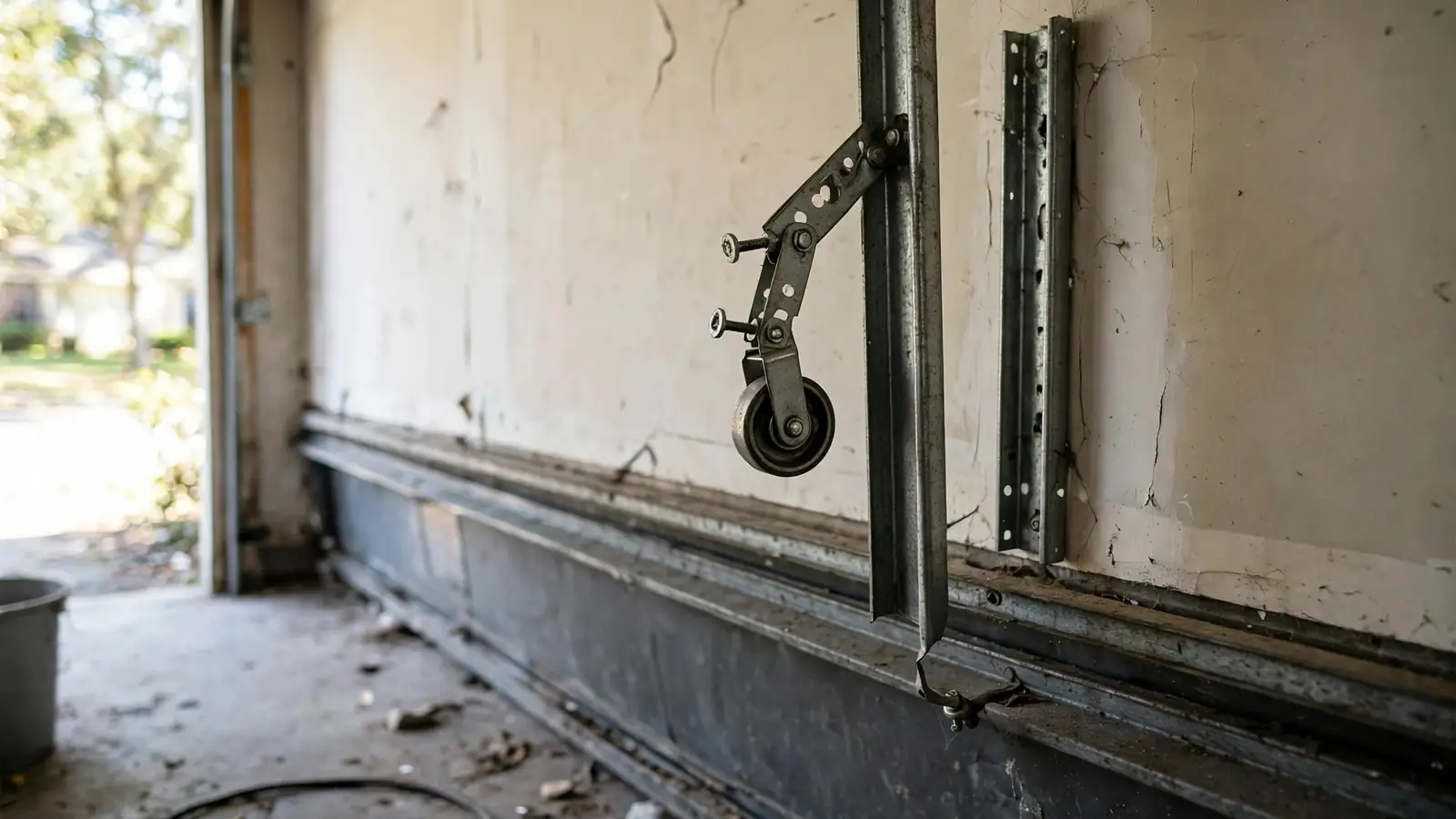
Key facts: Garage door off track
In this guide
- 1Garage door off track: the short answer
- 2Off-track clues and causes
- 3Bent track figure
- 4Safe steps with an off-track door
- 5Common causes of derailment
- 6Why off-track doors are dangerous
- 7How a technician fixes an off-track door
- 8Rehang or replace
- 9Off-track doors in Winston-Salem garages
- 10What to expect after calling about an off-track door
- 11Why one failure leads to another
- 12Tight garages and track damage
- 13Safety after an off-track repair
- 14How the floor and bottom seal play a part
- 15Everyday bumps that bend tracks
- 16Old track hardware in older garages
- 17Attached garages and derailed doors
- 18Cracked hinges after a derailment
- 19Wood doors that leave the track
- 20Storms and off-track doors
- 21Signs a door is about to leave the track
- 22The opener arm and the top panel
- 23Information that speeds up the repair
- 24Preventing derailment
- 25What to tell the technician about an off-track door
- 26Questions about off-track garage doors
Off track: the short answer
Garage door off track: the short answer
Unplug the opener, keep everyone clear and call a technician. Do not try to force the rollers back. Most off-track doors can be rehung once the cause, such as a bent track or broken cable, is fixed.
Off-track clues
Off-track clues and causes
| What you see | Likely cause | What to do |
|---|---|---|
| Roller outside the track | Impact or worn roller | Call |
| Door tilted | Cable or spring failure | Call |
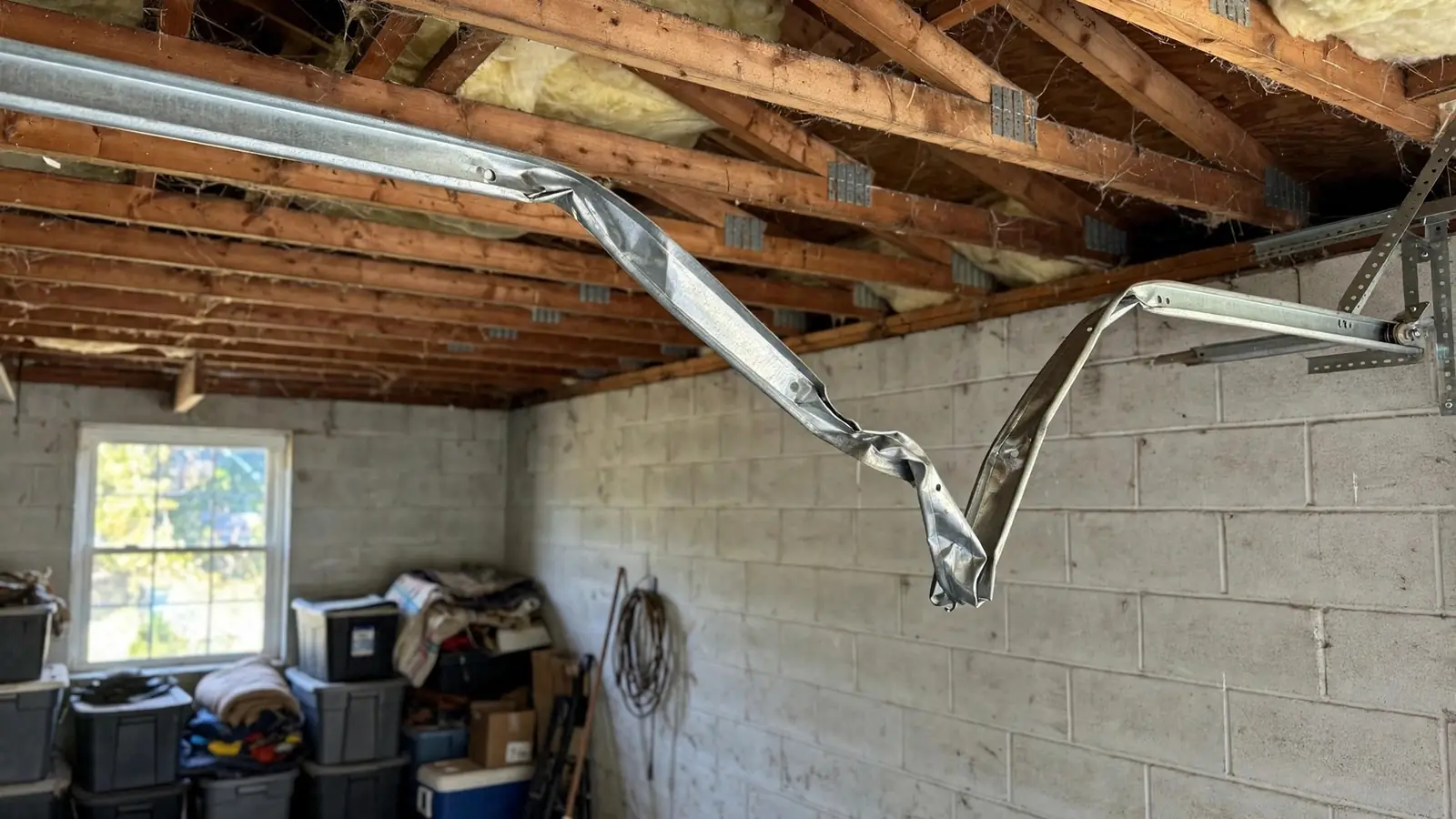
| Bent track | Vehicle or equipment hit | Call |
| Door jammed halfway | Binding track or roller | Stop and call |
Bent track figure
Safe steps
Safe steps with an off-track door
- Unplug the opener.
- Keep people and pets away.
- Do not pull the release on an open door.
- Photograph both sides.
Common causes
Common causes of derailment
Vehicle impacts, broken cables, worn rollers, loose tracks and obstructions.
Why it is dangerous
Why off-track doors are dangerous
The door is no longer guided and can drop or twist, injuring anyone nearby.
How technicians fix it
How a technician fixes an off-track door
- 1
Secure
Clamp the door.
- 2
Find the cause
Inspect cables, springs, rollers and tracks.
- 3
Repair
Straighten or replace tracks and parts.
- 4
Rehang
Guide rollers back in.
- 5
Test
Balance and retest the opener.
Repair or replace
Rehang or replace
Most doors can be rehung. Badly bent panels may need replacing.
Winston-Salem notes
Off-track doors in Winston-Salem garages
Narrow older garages make track bumps more likely; winter ice can push the bottom panel crooked.
What happens after you call
What to expect after calling about an off-track door
On the call, the technician will ask how the door is hanging, which side is out, whether cables are loose and whether anything hit the door. That helps them judge the urgency and the parts likely needed. If you arrange a visit, they secure the door first, then explain what caused the derailment before rehanging it.
Rollers, cables and tracks together
Why one failure leads to another
A worn roller can wobble out of a track; a door out of its track can twist and break a cable; a broken cable can leave the door hanging from one side, bending the track further. That is why technicians inspect the whole system after a derailment, not just the roller that popped out.
Garages with tight clearances
Tight garages and track damage
Narrow garages behind older Winston-Salem homes leave little room on either side of the car. Mirrors and bumpers clip vertical tracks easily, bending them inward. Even a small bend can catch rollers. If your garage is tight, consider bumper guards on the track or guide marks on the floor.
Keeping the door safe after repair
Safety after an off-track repair
After rehanging, test the opener's reversal by placing a soft object under the door and by breaking the sensor beam during closing. If the door does not reverse immediately, stop using the opener and call back. A properly rehung door should run quietly and close evenly.
Bottom seals and derailment
How the floor and bottom seal play a part
A torn or frozen bottom seal can catch on the slab and push one side of the door up as it closes. Uneven floors do the same. Replacing worn seals and clearing ice keep the door closing square, which keeps the rollers centered in the tracks.
Call about this problem
Questions about garage door off track?
One call connects you with an independent garage door repair contractor who serves Winston-Salem.
Kids, bikes and track bumps
Everyday bumps that bend tracks
Bikes leaned against the track, toys rolled into it and lawn equipment parked near it all bend vertical tracks over time. Keeping a clear zone beside each track inside the garage avoids small bends that later catch rollers.
Older track hardware
Old track hardware in older garages
Older garages may have track brackets screwed into soft or cracked jamb wood, loosening with every cycle. When rehanging a door, technicians often add new brackets into solid framing so the tracks stay put.
Off-track doors in attached garages
Attached garages and derailed doors
When a door derails in an attached garage that serves as the main entrance, the household is stuck using another door until it is fixed. Keep the interior door to the garage closed, keep children out, and plan for the technician to need clear access to both sides of the door.
Hinges after derailment
Cracked hinges after a derailment
The twisting forces of a derailment often crack hinges between panels. A cracked hinge lets a roller sit at the wrong angle, which can cause another derailment later. Replacing any cracked hinges is part of a proper repair.
Old wood doors
Wood doors that leave the track
Older wood sectional doors are heavy and can warp in humid weather, pulling rollers out of the track on one side. Sealing and painting the wood, checking that the door is balanced and keeping hinges tight help keep these doors on track.
Doors off track after a storm
Storms and off-track doors
High winds can push on a closed door and pop rollers out on wide doors without bracing. Debris blown into the garage can also block tracks. Check the tracks after storms before running the door.
Recognizing a near-derailment
Signs a door is about to leave the track
Rollers that ride near the edge of the track, a door that shudders as it moves, or a scraping noise in one spot are signs a derailment may be coming. Calling early can mean a simple track adjustment instead of a rehang.
Opener arms and the top panel
The opener arm and the top panel
The opener arm pulls on the top panel. If the door derailed while the opener was running, the arm bracket and top panel may be bent. Technicians check and reinforce them during the repair, adding a strut if needed so the panel does not flex again.
Calling from the garage
Information that speeds up the repair
When you call, describe the door's width, whether it has one or two springs, which side is out and whether a cable is loose. Photos of both sides help too.
Prevention
Preventing derailment
- Back out straight.
- Keep tracks clear.
- Replace worn rollers.
Tell the technician
What to tell the technician about an off-track door
- Which side is out.
- Whether a cable is loose.
- Whether anything hit the door.
Off-track guide questions
Questions about off-track garage doors
Can I push the roller back in?
It is not safe. The door may move suddenly.
Should I close the door with the opener?
No. Unplug it and call.
Will I need a new door?
Usually not.
Why did my door come off the track?
Impact, cable failure, worn rollers or loose tracks.
Can a worn roller cause a derailment?
Yes. Worn rollers wobble and can jump the track.
How long does rehanging take?
Often part of a single visit if no parts need ordering.
Is it safe to leave the door as it is until help arrives?
Usually, if everyone stays clear and the opener is unplugged.
Can ice cause it?
Yes, ice can push the bottom panel crooked.