
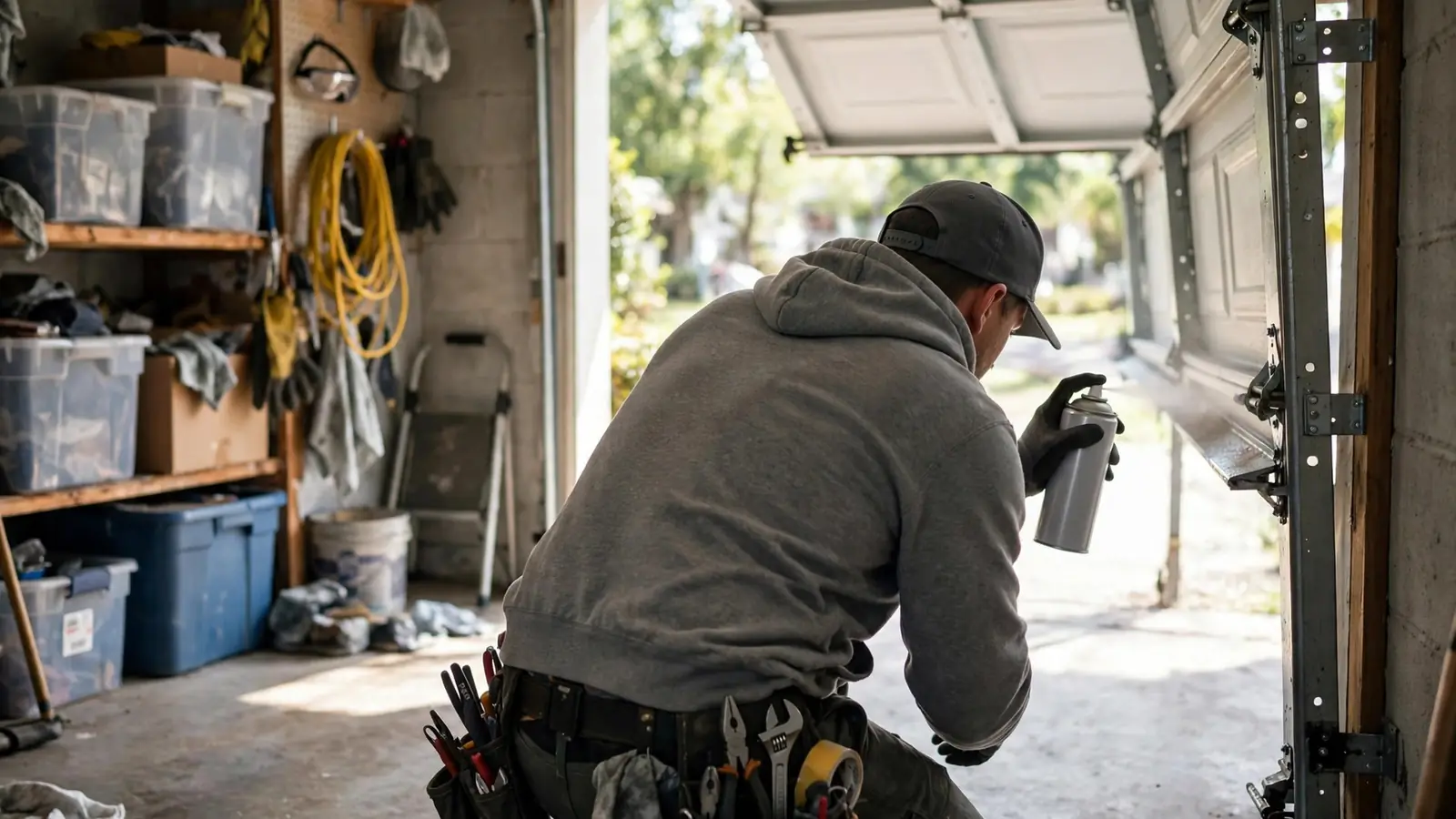
Key facts: Noisy garage door
In this guide
- 1Noisy garage door: the short answer
- 2Garage door noises and causes
- 3Worn roller figure
- 4Safe fixes for a noisy door
- 5Noisy rollers
- 6Noisy openers
- 7Humidity, pollen and noise in Winston-Salem
- 8How a technician quiets a door
- 9When noise means replacement
- 10Noises that mean stop and call
- 11Quiet fixes homeowners can do safely
- 12Noise in homes with rooms over the garage
- 13Why noise changes with the seasons
- 14Telling opener noise from door noise
- 15Why loose hardware rattles
- 16Noises from wood and carriage-style doors
- 17Squeaking springs
- 18Shaft bearings and noise
- 19Why the door slaps when it closes
- 20Quieting a chain-drive opener
- 21What normal garage door sound is
- 22Squeaks from weatherstrip
- 23When quiet is not the only goal
- 24Keeping a door quiet
- 25What to tell the technician about a noise
- 26Questions about noisy garage doors
Noisy door: the short answer
Noisy garage door: the short answer
Squeaks usually mean dry hinges, rollers or springs. Grinding often means worn rollers or an opener gear. Rattling means loose hardware. Bangs can mean a spring breaking. Lubricate, tighten what you safely can and call for grinding or bangs.
Noise table
Garage door noises and causes
| Noise | Likely cause | What to do |
|---|---|---|
| Squeak | Dry hinges or springs | Lubricate |
| Grinding | Worn rollers or opener gear | Call |
| Rattling | Loose bolts or chain | Tighten accessible bolts |
| Popping | Roller jumping or spring binding | Call |
| Loud bang | Spring breaking | Call |
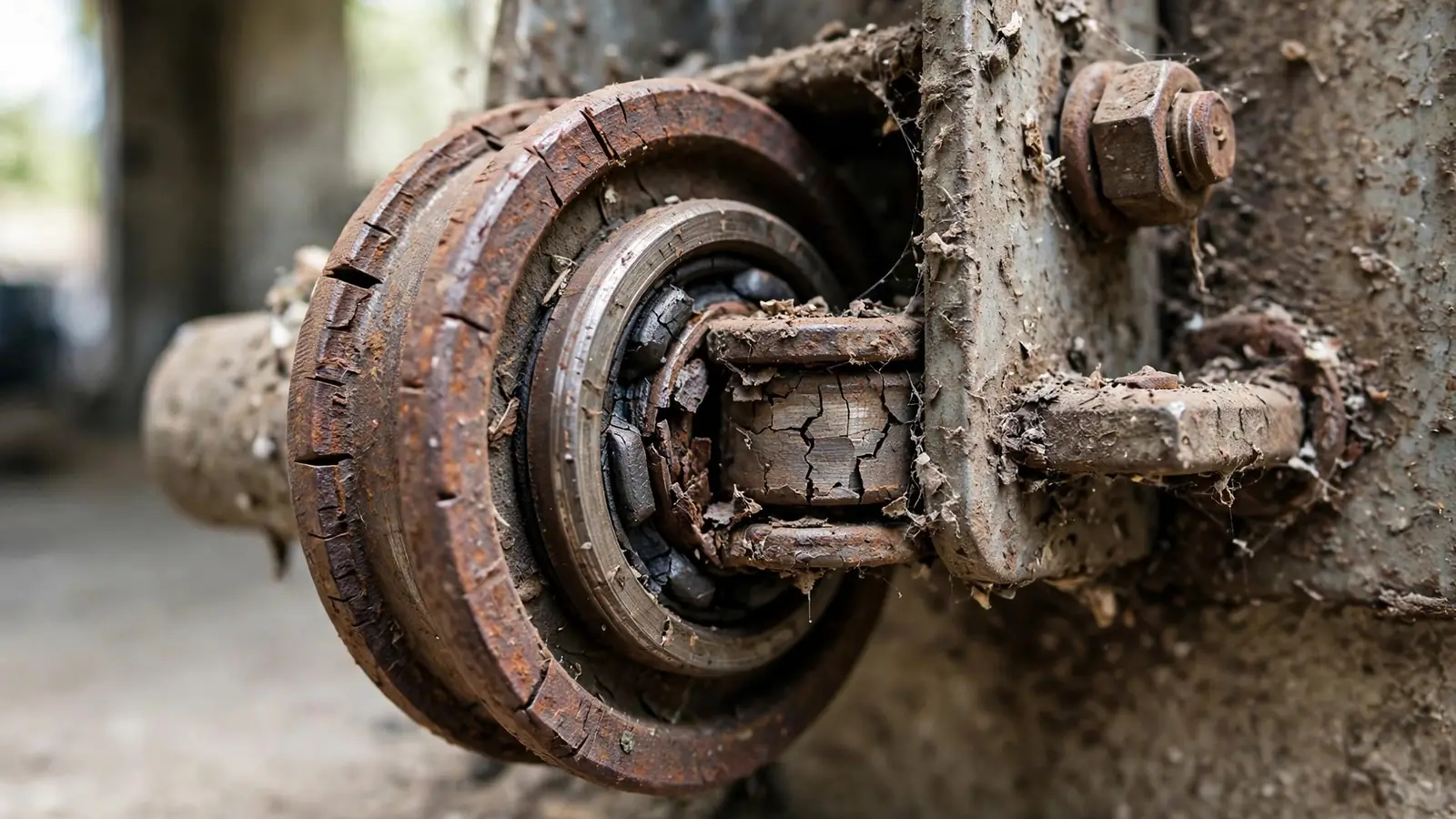
Worn roller figure
Safe fixes
Safe fixes for a noisy door
- Lubricate hinges, roller bearings and springs.
- Tighten hinge bolts you can reach safely.
- Wipe tracks clean.
- Do not touch bottom brackets or springs.
Rollers
Noisy rollers
Steel rollers without sealed bearings get loud. Nylon rollers with sealed bearings are quieter.
Opener noise
Noisy openers
Chain drives are louder; belt drives are quieter. Grinding from the motor suggests gear wear.
Humidity and pollen
Humidity, pollen and noise in Winston-Salem
Pollen and dust dry out bearings; humidity rusts hardware. Both make doors louder.
Technician fixes
How a technician quiets a door
- 1
Inspect hardware
Rollers, hinges, springs.
- 2
Replace worn parts
New rollers and hinges.
- 3
Lubricate
Correct products.
- 4
Adjust opener
Chain tension and settings.
Repair or replace
When noise means replacement
Rarely. Most noise is fixed with parts and lubrication.
Noises that need attention now
Noises that mean stop and call
A sudden loud bang usually means a spring broke. A loud pop followed by the door tilting can mean a cable failed or a roller jumped the track. Scraping metal as the door moves can mean a roller has left the track or a track is bent. Grinding from the opener while the door struggles suggests the opener is fighting a heavy door. Each of these is a reason to stop using the door and call.
Quiet fixes that are safe
Quiet fixes homeowners can do safely
Lubricating hinges, roller bearings and spring coils, tightening hinge bolts you can reach from the floor or a step stool, and wiping tracks clean are safe and effective. Replacing the bottom seal can stop slapping sounds when the door closes. Avoid touching bottom brackets, cables and spring winding cones, which are under tension.
Bedrooms over the garage
Noise in homes with rooms over the garage
In many newer Winston-Salem area homes, a bedroom or bonus room sits over the garage. Every rattle and grind travels into the house. Upgrading to nylon rollers with sealed bearings, adding a belt-drive opener and using rubber isolation pads where the opener mounts to the ceiling can make a dramatic difference.
Seasonal noise changes
Why noise changes with the seasons
In summer, humidity and pollen dry out bearings and make hinges squeak. In winter, cold thickens old lubricant and stiffens rubber seals, making the door groan and the opener strain. A lubrication pass before each season keeps noise down year-round.
Opener-specific noises
Telling opener noise from door noise
To separate opener noise from door noise, pull the emergency release with the door closed and move the door by hand. If it is quiet by hand, the opener is the source. If it is noisy by hand, the rollers, hinges or springs are. This simple test points the repair in the right direction.
Call about this problem
Questions about noisy garage door?
One call connects you with an independent garage door repair contractor who serves Winston-Salem.
Rattles from loose hardware
Why loose hardware rattles
Vibration loosens hinge bolts, track bolts and opener mounting brackets over time. A rattle that changes as the door moves often comes from a loose hinge or track bolt. Tightening reachable bolts helps; bolts on bottom brackets must be left to technicians.
Wood door noises
Noises from wood and carriage-style doors
Wood doors swell in humid weather and can rub against weatherstrip or the jamb, creating creaks and scraping. Keeping the wood sealed and adjusting the weatherstrip reduces rubbing.
Springs that squeak
Squeaking springs
Torsion springs can squeak or creak as they twist if the coils are dry or rusty. A light coat of garage door lubricant on the coils usually quiets them. A spring that grinds or makes a sharp snapping noise as it moves may be close to failing and should be checked.
Bearings at the spring shaft
Shaft bearings and noise
The bearings at each end of the spring shaft and in the center bracket can wear and grind. A worn bearing makes a rhythmic squeal or grind as the door moves and lets the shaft wobble. Bearings are replaced by technicians, often during spring work.
Bottom seal slap
Why the door slaps when it closes
A loud slap as the door meets the floor can come from a worn bottom seal, a door that closes too fast because of weak springs, or an opener with its close limit set too far. Each has a different fix, so describe the sound when you call.
Chain noise
Quieting a chain-drive opener
Chain-drive openers are inherently louder. A properly tensioned, lightly lubricated chain is quieter than a slack, dry one. If noise matters most, a belt-drive opener is the bigger fix.
When noise is normal
What normal garage door sound is
Every door makes some sound: a soft rumble of rollers, the hum of the opener and a gentle thump at the bottom. New, sharp or changing noises are what deserve attention.
Weatherstrip noise
Squeaks from weatherstrip
The rubber weatherstrip along the sides and top can squeak as the door rubs past, especially when it is dry or new. A little silicone spray on the weatherstrip contact surface often quiets it.
Noise and safety
When quiet is not the only goal
A quiet door is pleasant, but a door that suddenly becomes quieter because it is not moving properly is not an improvement. Always pair noise fixes with the monthly balance and reversal checks.
Prevention
Keeping a door quiet
- Lubricate twice a year.
- Replace worn rollers.
- Keep tracks clean.
Tell the technician
What to tell the technician about a noise
- What the noise sounds like.
- When it happens.
- Where it seems to come from.
Noise guide questions
Questions about noisy garage doors
What should I use to lubricate my door?
Garage door lubricant or light silicone or lithium spray.
Is grinding dangerous?
It signals wear. Have it checked.
Will nylon rollers make my door quieter?
Usually, yes.
How often should I lubricate my garage door?
About twice a year, before summer and before winter, and more often in dusty or pollen-heavy garages.
Are squeaky springs dangerous?
Usually they just need lubrication, but grinding or snapping sounds should be checked.
Will a belt-drive opener make my garage quieter?
Usually. Belt drives are much quieter than chain drives.
Why does my door slap the floor when it closes?
A worn bottom seal, weak springs or an opener close limit set too far are common causes.
Why is my door louder in summer?
Humidity and dust affect bearings and hardware.
Should I lubricate the tracks?
Wipe them clean instead; heavy grease collects dirt.